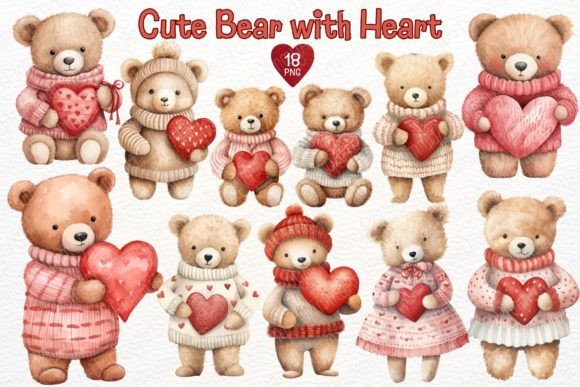
Cute Bear with Heart Watercolor Clipart: Illustrations Review
When evaluating a new graphic design asset for a client project, my first assessment always centers on emotional resonance and technical versatility. Upon reviewing the Cute Bear with Heart Watercolor Clipart, the immediate impression is one of soft nostalgia and genuine warmth. This is not merely a generic vector; it possesses the organic texture and fluid edges characteristic of traditional hand-painted illustrations. For a designer tasked with building a visual identity for a handmade business, nursery brand, or artisanal bakery, this asset communicates tenderness instantly. The watercolor washes create a sense of authenticity that flat digital art often lacks, making it an ideal candidate for brands that need to establish trust and approachability through their marketing visuals.
Elevating Brand Identity for Handmade and Nursery Markets
In a recent concept phase for a boutique children’s clothing line, I needed a central motif that could anchor the brand identity without feeling overly juvenile. The Cute Bear with Heart Watercolor Clipart served as the perfect emotional hook. When integrated into logo design concepts, the bear acts as a friendly mascot that softens typography. Pairing this illustration with a rounded serif font creates a classic, storybook aesthetic, while combining it with a modern sans serif typeface bridges the gap between traditional charm and contemporary retail. For small business branding, this duality is essential. It allows the brand to feel established yet accessible. As a core element in a design bundle for such a client, this clipart provides the foundational imagery needed across business cards, thank-you notes, and packaging design, ensuring visual consistency from the first touchpoint to the unboxing experience.
Performance Across Print-on-Demand and Merchandise Applications
Beyond branding, this asset proves its worth in commercial design scenarios like print-on-demand and merchandise creation. When designing for t-shirt design or tote bags, the watercolor texture adds necessary depth to what could otherwise be a flat graphic. I tested this clipart on both white and heather gray fabric mockups, and the transparency of the PNG design allowed the fabric texture to show through slightly, enhancing the vintage feel. For Cricut project users and sticker design enthusiasts, the distinct color separation makes it easier to visualize layered vinyl applications or sublimation design transfers. However, designers must be mindful of the ink density; watercolor effects can sometimes appear muddy if printed on low-quality substrates. Always request a physical proof or use high-resolution product mockup templates to verify that the delicate heart detail remains crisp at the intended print size.
Navigating Layouts: Where This Illustration Shines and Struggles
Understanding spatial requirements is critical when deploying this Cute Bear with Heart Watercolor Clipart. It performs exceptionally well as a hero graphic for web design, Pinterest pins, and social media graphics where there is ample negative space to let the artwork breathe. In editorial design for baby shower invitations or seasonal greeting cards, it serves as a beautiful focal point that guides the viewer's eye toward the text. Conversely, this asset requires careful handling in crowded layouts. Because watercolor edges are inherently soft and irregular, placing this bear against a complex, busy background can cause it to visually disappear. It struggles in minimalist corporate environments or tech-focused branding where sharp lines and high contrast are mandatory. If your client’s visual hierarchy relies on bold, aggressive messaging, this gentle illustration may dilute the intended impact rather than enhance it.
Technical Due Diligence for Professional Designers
Before committing this digital product to a paid client deliverable, rigorous technical testing is non-negotiable. First, inspect the PNG transparency. Some clipart files retain white halos or jagged anti-aliasing artifacts that look unprofessional when placed over colored backgrounds. Zoom in to 400% to ensure the edges blend naturally. Second, test the asset in grayscale. A strong illustration should maintain readability and form even without color; if the bear and heart merge into a single gray blob in black and white, you will face accessibility issues in certain print applications. Third, verify the resolution. For professional packaging design or large-format posters, standard web resolutions are insufficient. Ensure the file supports scaling up to at least 300 DPI at the final print dimensions. Finally, always confirm the commercial license terms. Using an asset from a creative marketplace requires clear documentation that permits resale, modification, or inclusion in end products for sale, especially for Etsy product listings or digital templates.
Typography Pairings and Emotional Engagement Strategy
The success of this Cute Bear with Heart Watercolor Clipart often hinges on typographic synergy. During my review process, I experimented with various font styles to gauge versatility. Script fonts amplify the romantic, sentimental mood, making it perfect for Valentine’s Day campaigns or wedding stationery. However, this combination can risk looking dated if not balanced with modern spacing. Handwritten display fonts offer a playful alternative that aligns well with the whimsical nature of the bear, suitable for kids' party supplies or educational materials. For a more sophisticated approach, I found that pairing the clipart with a clean, geometric sans serif created a striking juxtaposition that felt fresh and marketable. This flexibility makes the asset valuable for content creators who need to adapt the same visual element across different campaign moods while maintaining brand recognition.
Strategic Value for Digital Sellers and Content Creators
For those operating in the digital seller space, this illustration offers significant utility beyond direct client work. As part of a Canva template kit, the Cute Bear with Heart Watercolor Clipart can serve as a drag-and-drop element for customers creating their own social media posts. Its universal appeal reduces the friction for non-designers trying to achieve a polished look. When used in blog visuals or website headers, it increases dwell time by adding human-centric warmth to digital interfaces. However, creators must avoid overusing the asset to the point of saturation. To maintain exclusivity and value, consider modifying the clipart—adjusting hue, adding texture overlays, or cropping to focus on specific details like the heart. This ensures your final output remains unique in a crowded creative marketplace while leveraging the professional quality of the base illustration.
Ultimately, the decision to incorporate this asset should be driven by the specific emotional goals of the project. It is a powerful tool for fostering connection and softness, provided it is applied with technical precision and strategic restraint. By respecting its stylistic boundaries and verifying its production readiness, designers can transform this simple watercolor bear into a cornerstone of effective, emotionally resonant commercial design.