Whiskey Watercolor Clipart: An Embroidery Review
As a professional embroidery designer and product reviewer, I approach every new digital asset with a healthy dose of skepticism. When evaluating Whiskey Watercolor Clipart for potential use in machine embroidery projects, my first thought is never about how pretty it looks on a screen. Instead, I immediately wonder how those soft, blended watercolor edges will translate into thread. Watercolor illustrations are notoriously tricky to digitize because they rely on transparency and gradient, two things that traditional satin stitch and fill stitch struggle to replicate without looking heavy or muddy. However, after reviewing this specific collection of Illustrations, I see significant potential for craft business owners and Etsy sellers who understand how to adapt digital art for textile application.
First Impressions and Visual Mood
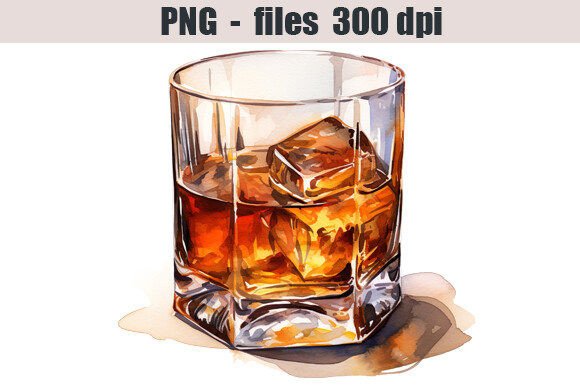
The visual personality of this Whiskey Watercolor Clipart leans heavily into rustic sophistication. It does not feel like a generic bar logo or a cartoonish drinking graphic. The mood is warm, nostalgic, and distinctly artisanal. For an embroidery project, this aesthetic is gold. It suggests high-end custom apparel rather than cheap novelty wear. The shapes appear organic, which is excellent for avoiding the "stiff box" look that plagues many digitized designs. When I look at these assets, I can already envision them paired with natural linen textures, dark denim, or cream-colored cotton. The design elements have enough negative space to allow the fabric texture to breathe, which is crucial for maintaining the watercolor illusion once stitched.
Real-World Application: The Custom Tote Bag Test
To truly evaluate this clipart, I mentally placed it into a real-life scenario: creating a premium embroidered tote bag for a boutique wedding gift line. In this context, the Whiskey Watercolor Clipart serves as more than just decoration; it acts as a branding element for the couple's home bar theme. A standard vector file might look too corporate on a canvas tote, but this watercolor style mimics hand-painting. For a handmade product intended as a personalized gift, that perceived artistic value is everything.
In this specific use case, I would likely treat the clipart as a guide for a mixed-media approach or a specialized digital embroidery file conversion. If stitching directly, the design works best as a centerpiece on a natural canvas tote bag design. The earthy tones typical of whiskey themes complement unbleached cotton beautifully. Customers receiving this finished product are looking for warmth and craftsmanship. Because the clipart avoids harsh lines, the resulting sweatshirt embroidery or tote bag feels intimate and bespoke, significantly increasing the perceived value of the item compared to mass-produced alternatives.
Where Caution is Required in Stitching
While the aesthetic is strong, practical application requires careful judgment. Watercolor-style Illustrations often contain fine details that do not survive the digitizing process well on certain substrates. You must be wary when applying this design to textured fabrics like terry cloth or ribbed knits. The subtle shading that makes the whiskey glass or bottle look dimensional on-screen can easily get lost in the pile of a towel or the stretch of a sweatshirt.
Furthermore, small hoop sizes present a challenge. Reducing complex watercolor art to fit a 4x4 hoop often results in stitch density issues. If the details become too dense, you risk needle breaks or fabric puckering. Conversely, if the software removes too much detail to compensate for size, the design loses its character. Dark fabrics also require extra planning. Watercolor relies on light passing through layers; on black denim, you may need a white underlay base, which changes the drape of the garment. Always inspect tiny lettering or intricate garnish details within the clipart before committing to production. If the lines are thinner than 1mm in the source art, they may need to be redrawn as running stitch accents rather than direct conversions to ensure clarity in the finished product.
Elevating Brand Value and Customer Trust
For Etsy sellers and small shop product creators, consistency is key to building trust. Using cohesive design assets like this Whiskey Watercolor Clipart helps establish a recognizable brand identity across different mediums. Whether you are selling printable mockups, digital embroidery files, or physical embroidered patches, the unified watercolor aesthetic signals professionalism. Buyers engage more readily with shops that curate a specific vibe. This clipart supports that curation by offering versatility—it is masculine enough for groomsmen gifts yet elegant enough for kitchen decor.
The visual appeal directly impacts buyer engagement. In a crowded marketplace, a listing featuring a soft, artistic whiskey motif stands out against aggressive, bold logos. It suggests a maker who cares about aesthetics. When used correctly in commercial embroidery projects, this style bridges the gap between modern digital design and traditional needlework, appealing to customers who want contemporary art with a handmade soul.
Practical Designer Notes for Success
Before you load this Whiskey Watercolor Clipart into your digitizing software or send it to a production house, adhere to these professional guidelines to ensure the best outcome for your embroidery project:
- Test on Scrap Fabric First: Never run a new watercolor conversion on a final product without testing. Check how the thread colors blend on your specific material choice.
- Verify Licensing: Confirm whether your purchase includes rights for commercial embroidery or only personal use. Selling finished products versus selling the digital embroidery file often requires different license tiers.
- Analyze Stitch Density: Watercolor effects require variable density. Ensure your digitizer uses appropriate underlay to prevent fabric distortion while maintaining the soft edge effect.
- Check Thread Color Contrast: View the design in grayscale. If the values look flat without color, the design lacks sufficient contrast for embroidery. Adjust saturation or add outline definition if necessary.
- Select Proper Stabilizer: For lightweight fabrics carrying this detailed art, use a cut-away stabilizer to support the stitch density. Tear-away options often fail to support watercolor-style fills.
- Mockup Validation: Create both light and dark background mockups. What looks vibrant on white may disappear on navy. Use these mockups to validate customer expectations before listing.
- Inspect Small Details: Zoom in to 100%. If garnish leaves or glass reflections are mere pixels, simplify them. Embroidery machines cannot stitch pixel-level detail reliably.
Final Thoughts for Makers
The Whiskey Watercolor Clipart offers a beautiful foundation for creative entrepreneurs willing to respect the technical limitations of thread. It is not a plug-and-play solution for every fabric, but for the right project—like a custom apron, holiday embroidery gift, or boutique merchandise—it provides a level of artistic nuance that standard vectors cannot match. By approaching this asset with a technician’s eye and an artist’s heart, you can transform digital Illustrations into tangible, high-value goods that resonate deeply with your audience. Remember, the goal is not just to reproduce an image, but to create a tactile experience that honors both the original art and the craft of embroidery.